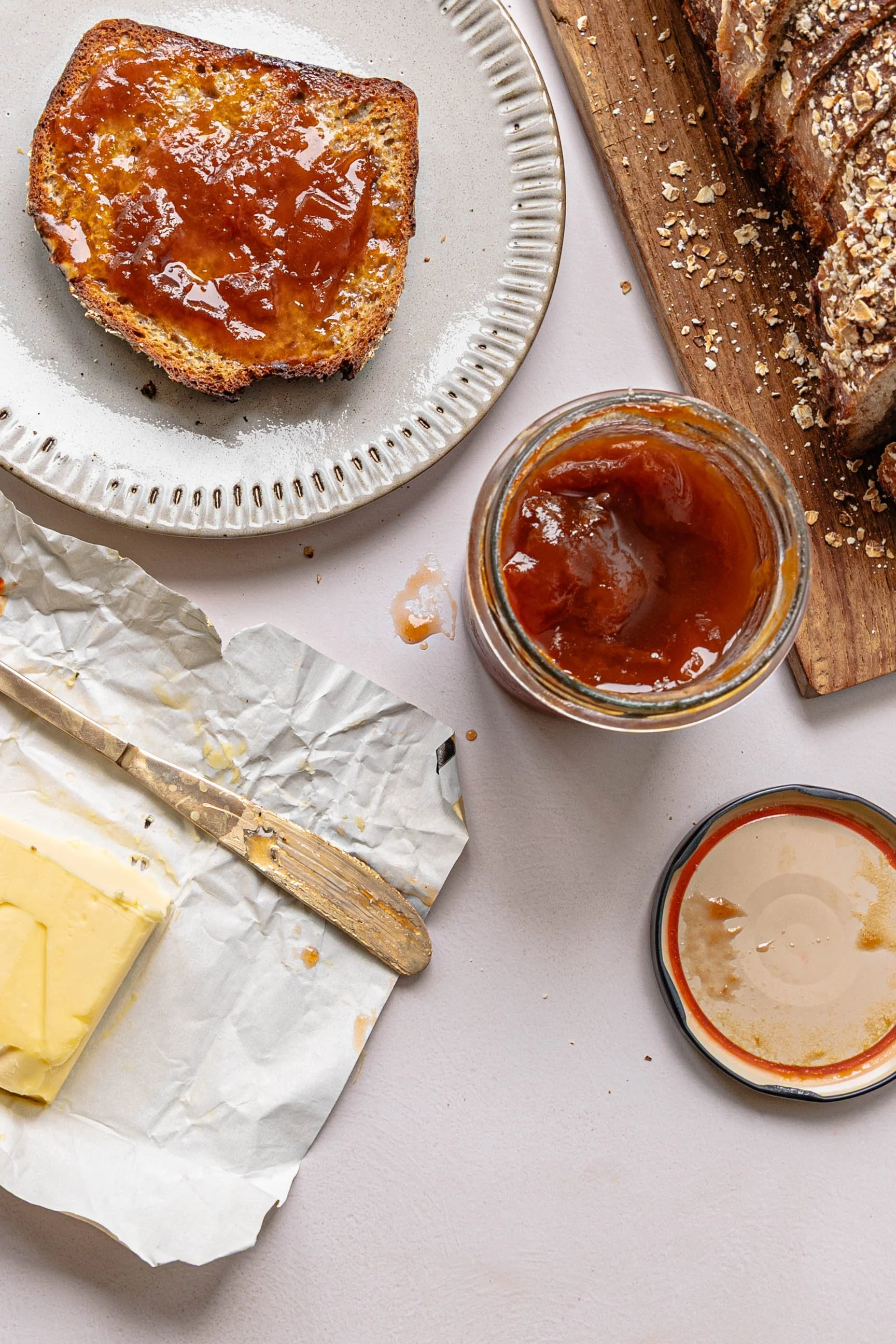
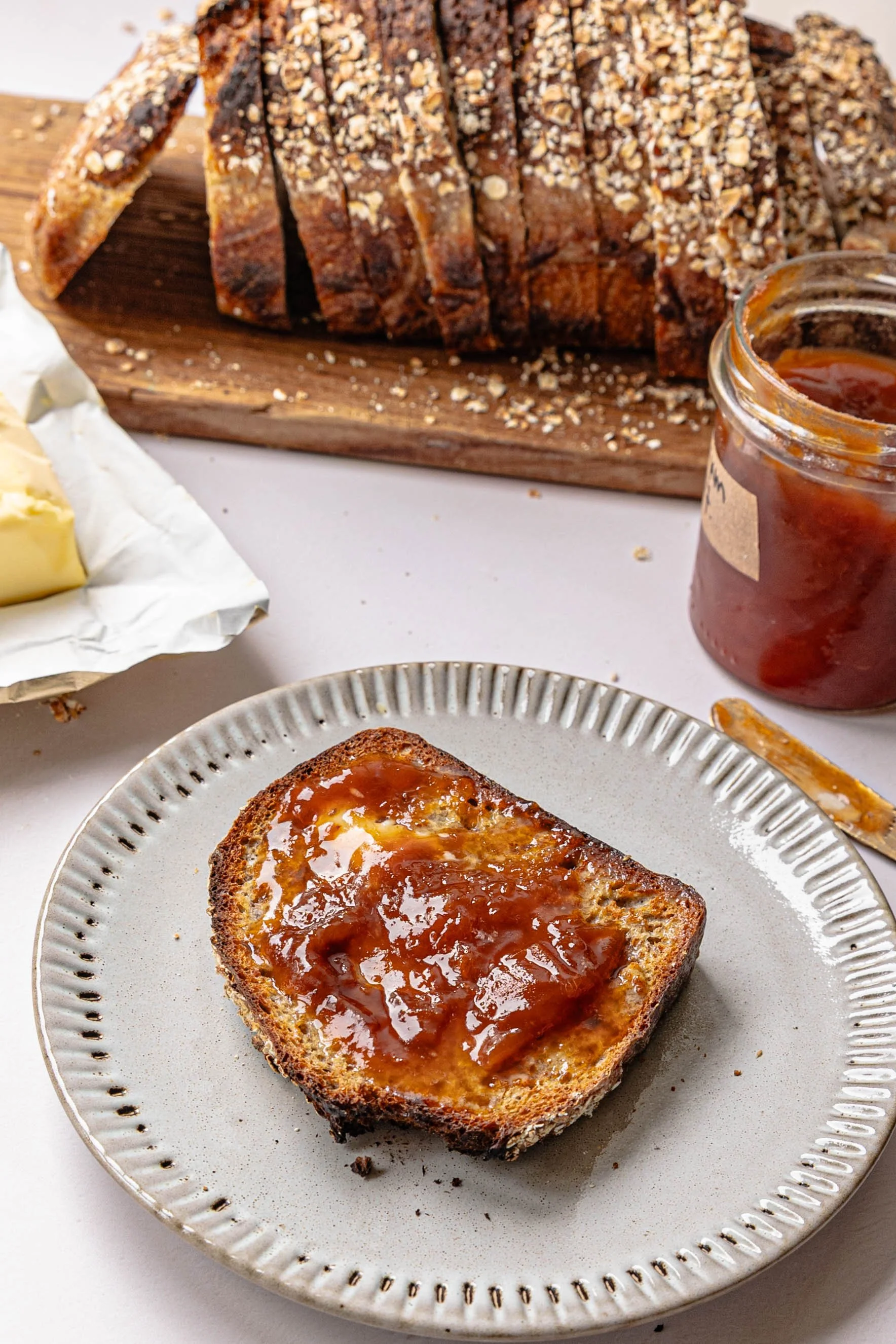
Oat Sourdough
As of early 2026, I am a mother. With new time pressures, some things have fallen to the wayside (my shows, morning workouts, sleep) but I am determined to maintain standards in the kitchen. Going into pregnancy, I felt that my sourdough starter would be the litmus test of how I was coping. If she was bubbly, I was doing okay. I’m happy to report that even though she has looked a little dormant at several stages along the way, she always bounces back with a fresh feed. (Trying my best not to include bouncing back as a prerequisite for my own well-being).
Becomes a mother, keeps mother alive.
When I had recovered sufficiently from birth, one of the first things I made was bread. It may seem labour intensive, but sourdough, especially a simplified recipe like this, is actually a rather mat-leave friendly thing to make. Minimal touches, slow process, useful end result.
Is this a sign I am devoted to my craft, or a sign that I am clinging to my old life and struggling to adjust to motherhood? Probably a little from column A and a little from column B.
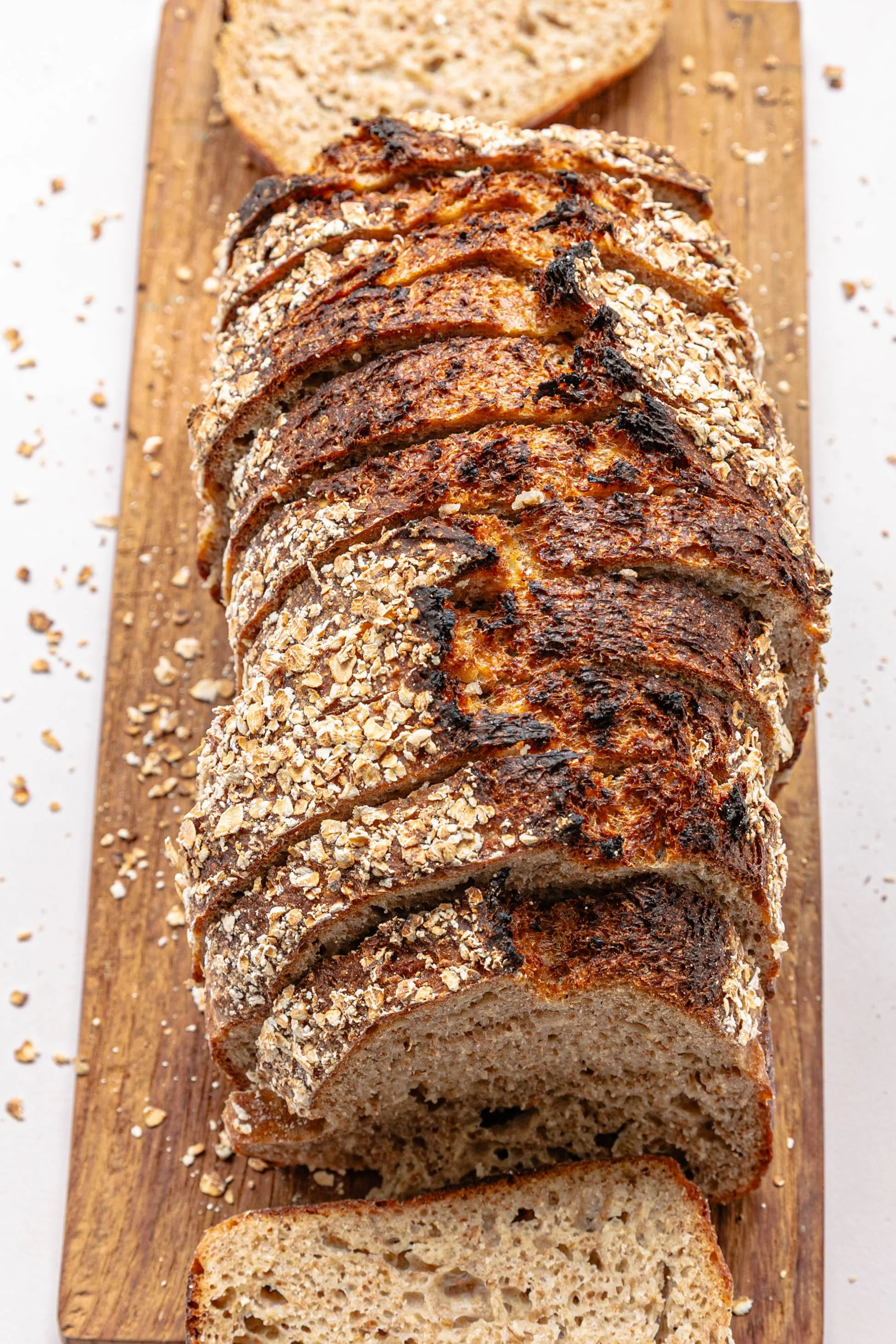
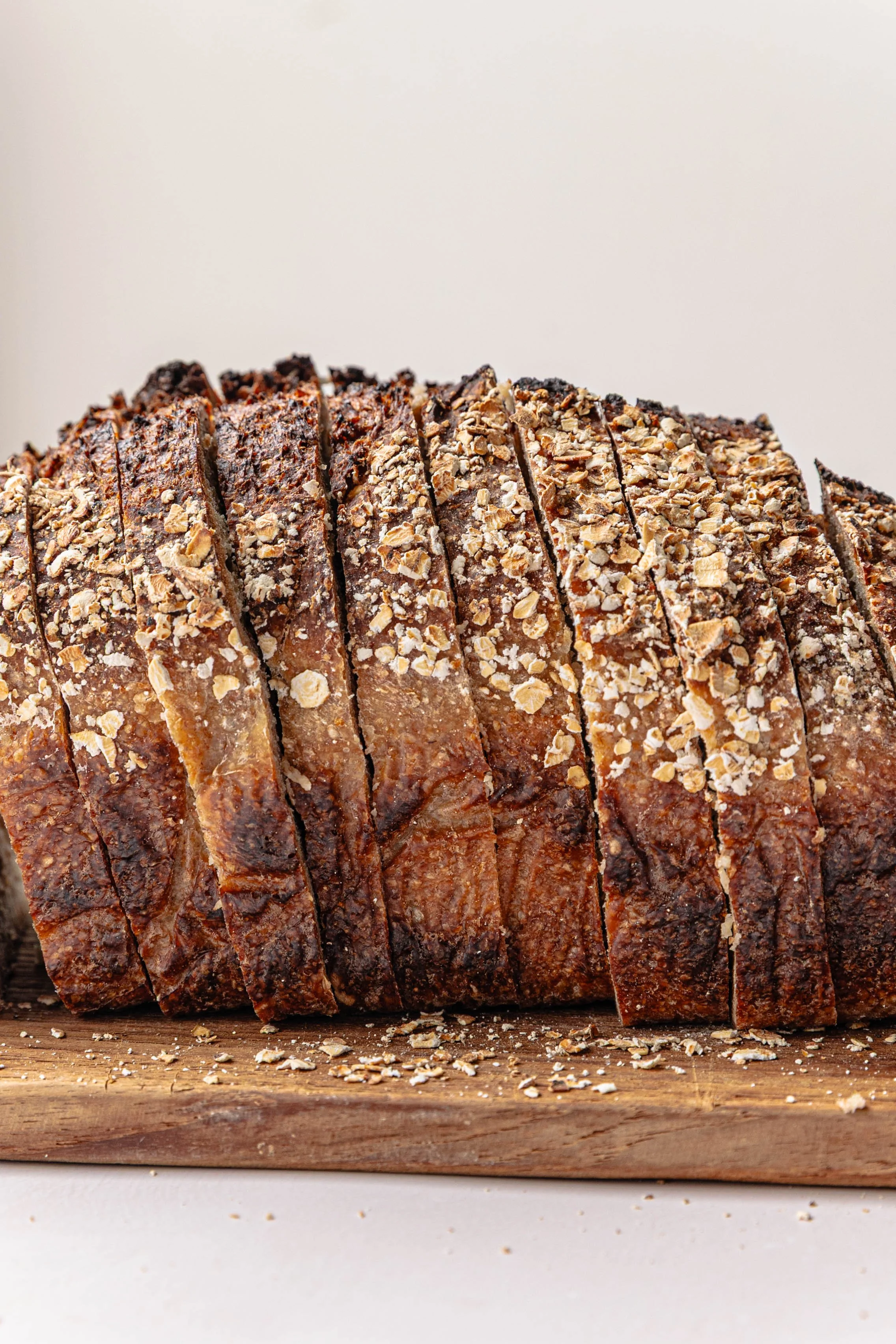
Regardless, this is a recipe I’m proud of. Along the lines of my ugly white and potato sourdoughs, it’s a rough and ready kind of a loaf. The oats make the crumb chewy, nicely glossy, and -in a departure from the potato sourdough - you don’t need to take out a grater. (When you’re prepping this wearing a baby in a sling, that counts for a lot). It won’t win you any prizes for aesthetics or technique, but sometimes, made is better than perfect.
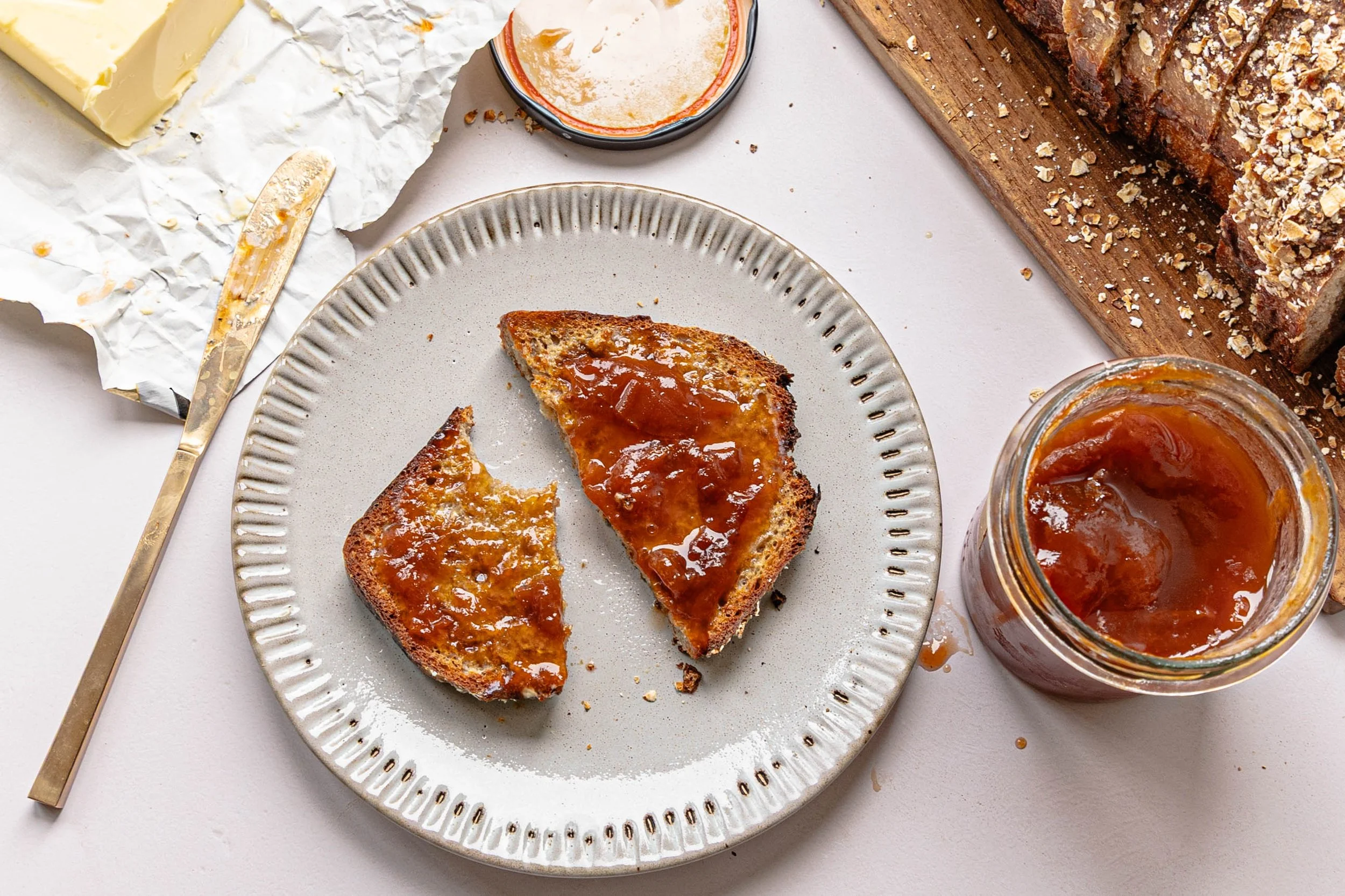
Ingredients
120g rolled oats (plus an optional extra sprinkle)
240g freshly boiled water
400g active sourdough starter*
600g lukewarm water
500g strong white flour
500g wholemeal flour
1 tablespoon fine salt
50g extra water
The night before you want to bake, place the rolled oats into the bowl you will mix the dough in, and pour the freshly boiled water on top. Stir, cover, and set aside to soak overnight.
*Feed your starter at the same time. To get 400g of active starter, I feed mine about 190g of rye flour and 210g of water. For peace of mind that it will be bubbly you can add a small drop of honey, maple syrup, or molasses.
The next day pour the 600g of lukewarm water and 400g of starter over the soaked porridge. Mix as best you can. There will be small pieces of porridge that don't fully break down and that's okay, but try to get them small and uniform. I use my hands for this.
Add the strong white flour and wholemeal flours. Mix, using your hands, then start to gently pull and fold it for about 5 minutes. During this time, you should start to observe some elasticity forming.
Cover, and set aside to autolyse for 90 minutes to 2 hours.
Line 2 13×23cm loaf tins with parchment paper.
Sprinkle over the salt and extra 50g of water. Squidge, squidge, squidge, until it's all incorporated.
Weigh the dough, then divide in half. Gently shape into 2 balls by scraping them across your counter, using 2 cupped hands, then place into the prepared loaf tins. (You can see a rough demonstration here - last slide).
Cover loosely with plastic bags, tie the end with an elastic band, then set aside to rise at room temperature for 4-5 hours. It won't be dramatically puffy and probably won't even reach the side of the tins, but it should look decidedly less dense than before. Place into the refrigerator overnight.
The next morning, preheat the oven to 240°C. Take the tins out of the fridge while the oven is heating up. If you like, mist the tops with water and sprinkle with rolled oats. Slash with a sharp knife to allow them to fully rise while in the oven.
Bake for 50 minutes, until dark golden brown and nicely risen. Once cool enough to handle, remove from the tins and let the loaves cool on a wire rack.