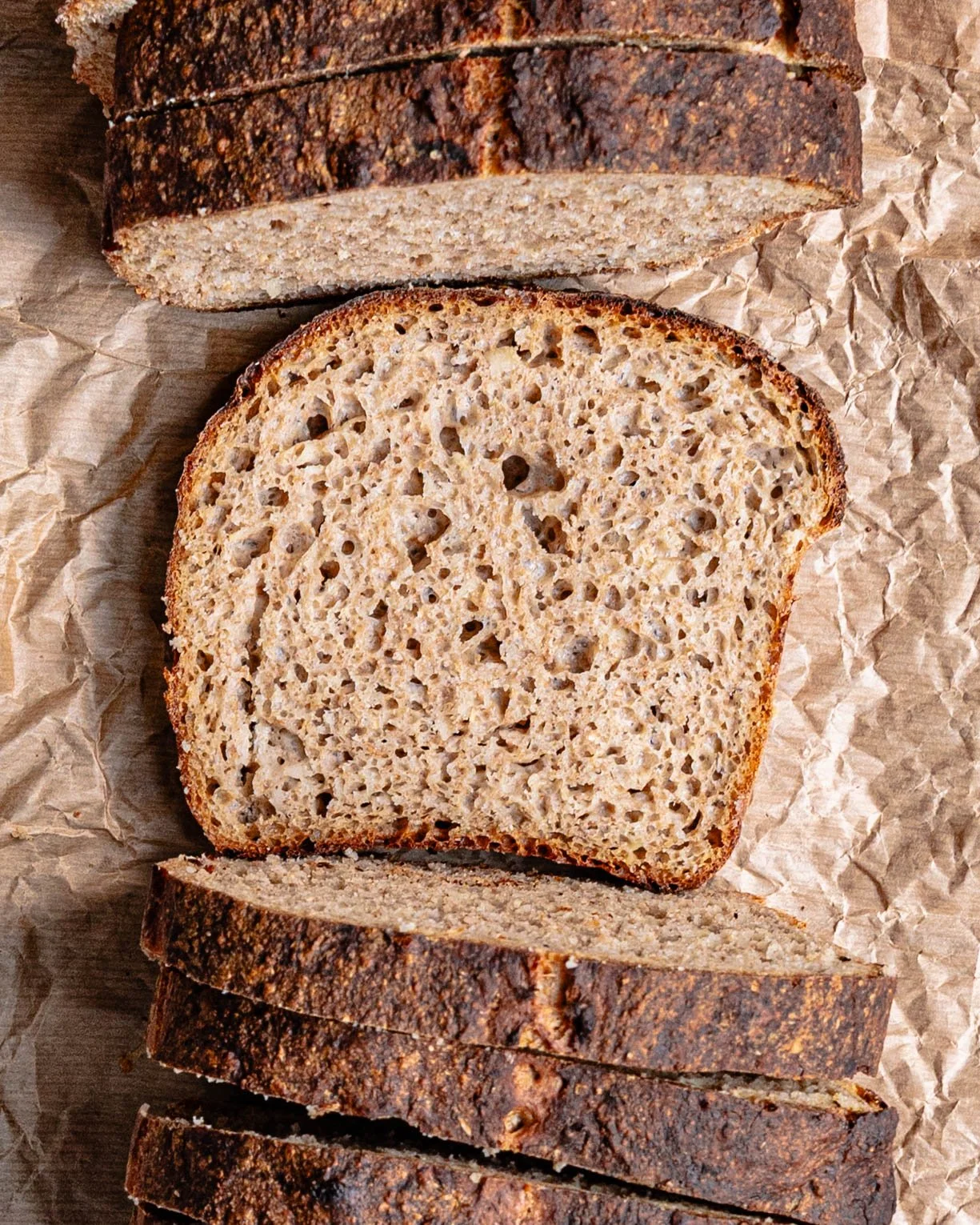
Potato Sourdough
Unoriginal story, but when I was younger I was obsessed with How To Be A Domestic Goddess by Nigella Lawson. I made nearly everything in that book. The fairy cakes, the schnecken, the cream cheese brownies. When I graduated onto a savoury recipe, I felt like a real grown up. There was one for a squidgy loaf of white bread made using mashed potatoes and it was epic. I vividly remember eating slices of that bread, toasted, and spread with lots of butter and jam. I made it on repeat and it felt pretty fool proof. As an actual grown up, I moved to London and tried The Dusty Knuckle’s potato sourdough. Again, epic bread. When I read their recipe and saw that they use grated raw potatoes instead of mash, I was intrigued.
My understanding is, potatoes have starch that retains water more effectively than flour alone. Meaning that potato bread tends to have a softer crumb that stays fresh for longer than bread made using purely flour, water, salt, and yeast. I also find that when I cover this dough in a plastic bag to prove, if the bag comes into contact with the dough, it peels right off. When I make regular sourdough sans potato, the plastic cover can become a bit of a sticky obstacle.
I’ve never used their actual recipe. I’m at a point where, I feel like sourdough starters are like wizard wands in Harry Potter - you have to work with the starter you’ve got. I’ve adapted most of my sourdough recipes so that they use a larger-than-average dose of starter. I’ve never had problems with over-proving and I’m happy with my results. So when I started working on this recipe I just added in some grated potato to my own sourdough loaf tin recipe. And I’ve loved it every time. I use the same, easy/lazy method as the one for my Ugly White Sourdough, the only changed being the aforementioned potato, and a blend of white and wholemeal flours.
I’ve tried this with a few different kinds of potatoes and can say that large, floury, baking potatoes work best. No need to peel unless they’re really dirty, just a scrub will do. Actually, leaving the skin on brings more bacteria that helps the yeast. I coarsely grate my potatoes, and can usually detect a few flecks of potato in the finished loaf. That doesn’t bother me, but if you want a more refined crumb you can finely grate yours.
Makes 2 loaves
Ingredients
400g active, recently fed sourdough starter*
650g lukewarm water
200g potato, skin-on but well scrubbed, coarsely grated
500g strong white flour
500g wholemeal flour
1 tablespoon fine salt
100g extra water
*the night before you want to start making this, feed your starter 200g each flour and water.
Mix the 650g of water and the starter in a large mixing bowl. Make sure the starter floats on the surface, even if only briefly—that’s a good sign it’s active. Use a whisk to mix until the water looks milky. Add the grated potatoes and stir to combine.
Add the flour and gently knead (more like pull and fold it) for about 5 minutes. You should see the dough go from rough and shaggy to a little bit smoother and more elastic.
Cover and leave to autolyse for 90 minutes to 2 hours. This lets the flour fully hydrate and encourages gluten development.
Sprinkle over the salt and the extra 100g of water, then squidge it all in with your hands until fully incorporated.
Line two loaf tins with parchment paper. Divide the dough in half and gently shape. You don’t need to be precious here: just scrape the dough across the counter to create a smooth-ish surface, then place into the tins.
Cover loosely with a plastic bag, tie the ends with an elastic band, and leave to rise at room temperature for 4–5 hours, or until puffy and well risen. Then transfer to the fridge and prove overnight.
(The great thing about this recipe, is that if the plastic touches the dough it doesn’t stick to it like it does with white bread dough. Wholemeal flour absorbs more water than white flour and the starch in the potatoes creates an almost gel-like surface).
The next morning, preheat your oven to 240°C. Take the loaves out of the fridge while the oven heats up. Slash them down the middle with a sharp knife to allow them to fully rise while in the oven.
Bake for 30 minutes in the tins. Then carefully remove the loaves from the tins and return to the oven for another 20 minutes directly on the rack.
Cool completely on a wire rack before slicing.